Category: Nature
-
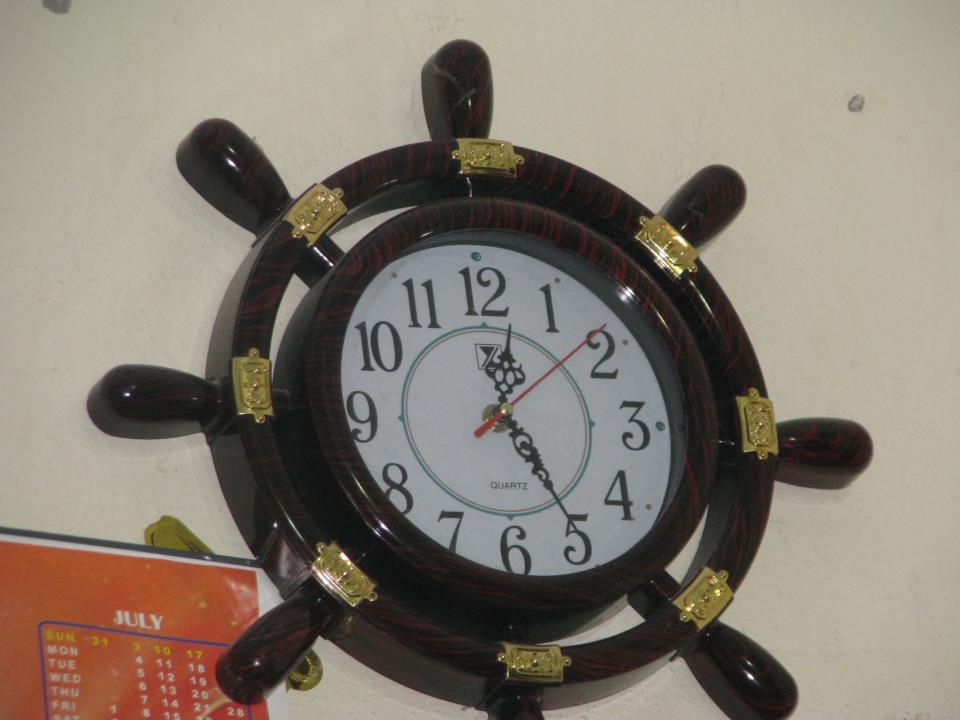
Whats a clock?
A clock is a device that knows how much energy is input and at what “time” rate. Time-rate can be arbitrary in nature but NOT in a clock. A clock is an anthropic time device. A clock is designed to know what energy is spent for a predefined uniform rate of spending that energy so…
-
Mach’s Principle
This is called Mach’s principle because Ernst Mach had questioned the validity of associating the rotation to immediate surrounding. Now to visually understand the Mach’s principle Weinberg stood up, in that video, and made a movement which explained how your hands rotate faster or slower. I didn’t understand this well enough so one night I…
-
Heisenberg’s Uncertainty Principle from a new angle
Heisenberg’s Uncertainty Principle from wave-particle duality. The wave-particle duality states that any mechanical object can exhibit both wave and particle behavior and the complementarity priniciple states that they can not both be observed simultaneously. That is the wave and teh particle nature are only exclusive ly observed given a specific time or time window, the…
 M Dash Foundation: C Cube Learning