Category: particles and their properties

  • The hinterland of particle physics

    The hinterland of particle physics

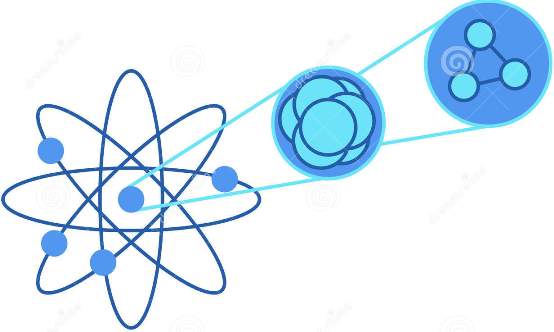
    Particle Physics is collectively an effort to study the exciting world of subatomic particles and the nature of their interaction. By subatomic we mean anything that happens within the atom or below and not above. The implications could cover as much above, as it would be entailed by the precincts of natural laws. eg If…

  • Quantum Entanglement .. a short primer !

    This fact is inherently, nothing but the concept of Quantum Entanglement. Unlike classical particles which are completely independent of each other the quantum sized objects are not. For physical intuition they are at a very small and subtle level intertwined with each other as if threads are kind of tied onto each other. We can-not…

  • This year’s Nobel prize in Chemistry.

    What happens when some UV falls on biological molecules? (or any kind) some of these molecules like the wooden pole absorb the energy and there still remains energy which they can emit as visible light. So the UV light kicks the molecules and the molecules in turn emit visible light. This implies that the UV…

  • 3 myths of physics, especially in textbooks.

    2. Last year in a text book in Indian High School curriculum, I spotted and corrected with my students, the following: Myth; there are only 3 quarks that have been detected or FOUND/confirmed so far, in nature. Its based on a knowledge that was true more than 3 decades ago. All quarks, 6 of them,…

  • Why is the helicity for a mass-less particle Lorentz invariant?

    Result; now that photons are mass-less, their energy, momentum, speed, etc are no more variables, in the sense of arbitrariness. They are constants, taking only a few values, but constant in a given situation. But other particles have these properties; arbitrary. So electrons energy and momentum are not fixed, but arbitrary. But as long as…