Category: Lectures on physics
-
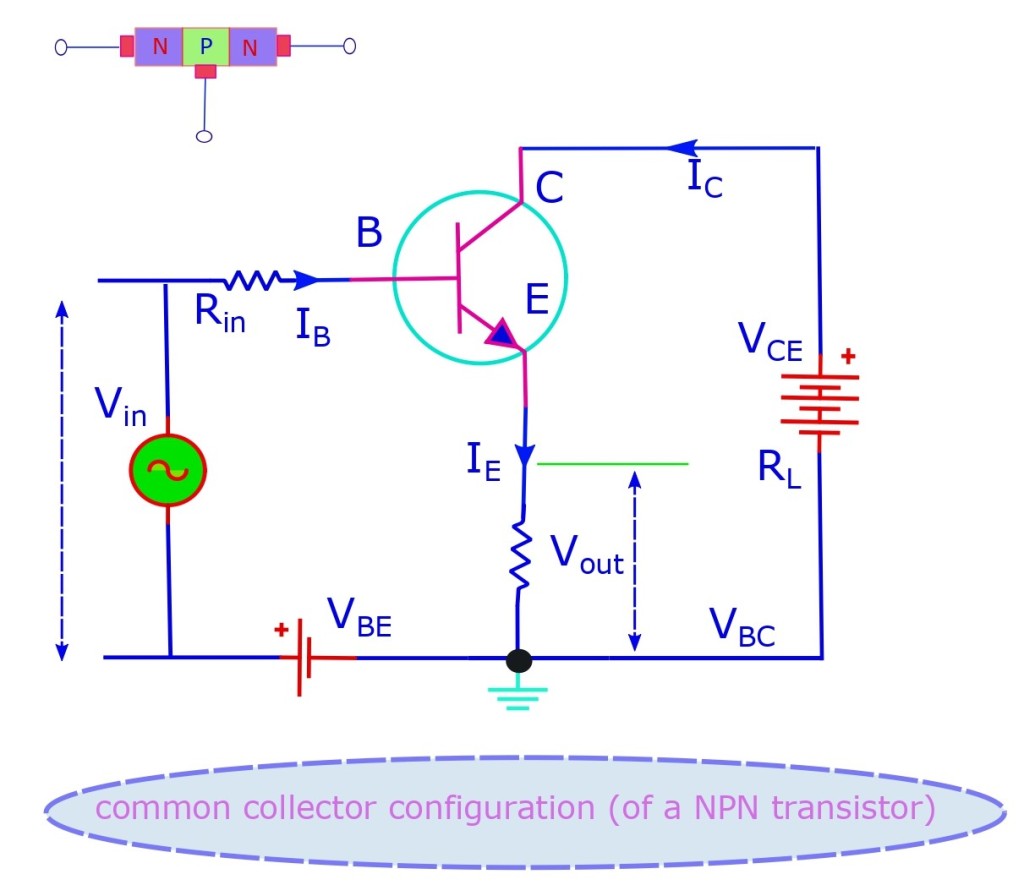
Bipolar Junction Transistors (BJT), Lecture-XV and XVI.
Today we will discuss another line of application of the pn semiconductor diodes: the so called bipolar junction transistors or BJT in short. There are two ways in which pn junction diodes can be joined together sharing a common P or N terminal. This produces 3 layer, 2 junction, 3 terminal devices. Such devices are…
-

Zener diode and voltage regulation, Lecture-XII.
Today we will discuss the Zener diode. Zener diodes get applications in various facets of electronics and electrical circuits. But we will focus on the most basic application of the same in voltage regulation. In our lecture-VII we discussed the current-voltage (IV) characteristics of the diodes, under forward and reverse bias, in detail. Lets recapitulate.…
-

Bridge type full wave rectifier, Lecture-XI.
In our last lecture we discussed the center tapped full wave rectifier and derived its most important parameters. Check that lecture for a conceptual continuity with the present lecture. Prior to that we discussed in much detail the case of the half wave rectifier and its parameters. Those two lectures can be accessed here. Today…
-

Center tapped full wave rectifier, Lecture-X
In our last two lecture we discussed in all detail the half wave rectifier which is constructed from an ideal diode and studied its various parameters such as its rectifier efficiency and transformer utilization factor. Please have a look at these lectures as the same will have an indubitable bearing on what we will discuss…
-

Barrier potential and width in a pn step junction, L-VI.
Today we will discuss about the depletion region in greater detail than before. We will derive a quantitative relation among barrier potential and its width which are created in the depletion region, as discussed before. We will also derive an expression for the electric field that is established due to this potential. Lets first recall…
 M Dash Foundation: C Cube Learning