Category: Lectures on physics
-
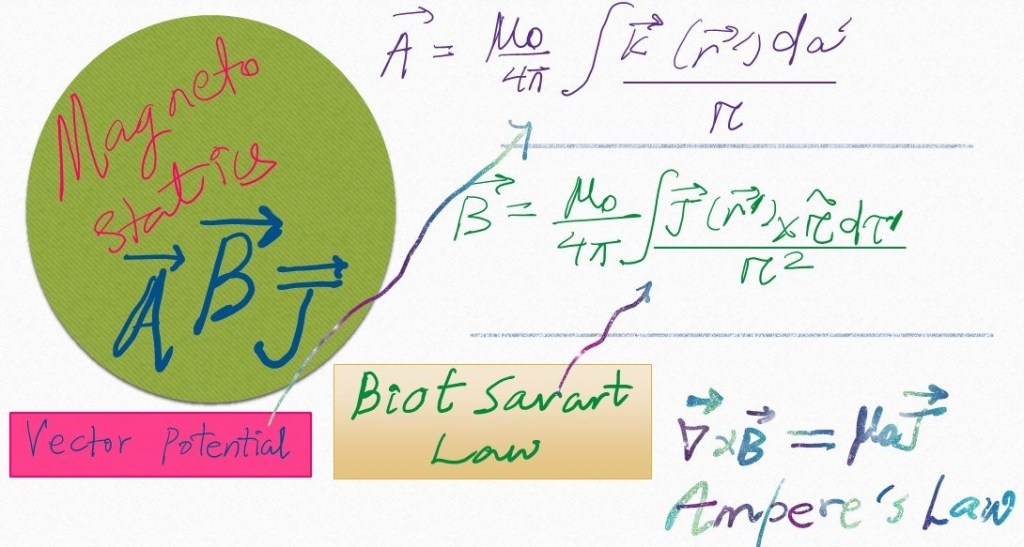
Magnetic vector potential of a rotating uniformly charged shell.
Today we will solve the problem of finding magnetic vector potential of a rotating, uniformly charged spherical shell. We won’t discuss the general idea behind the vector potential (how it follows from Helmholtz theorem, and gauge freedom etc) and how its defined. That will be part of a conceptual lecture and will be available when…
-
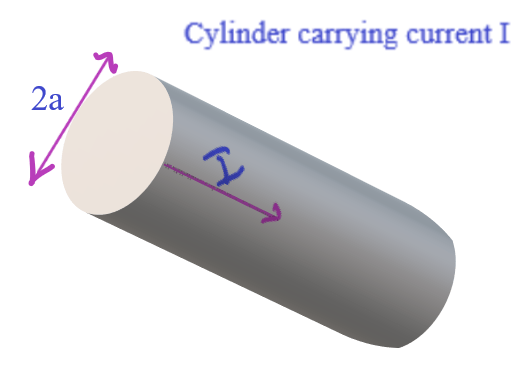
Problem 5.13 Application of Ampere’s Law.
Yesterday we saw an interesting application of the Ampere’s Law (– in magnetostatics and sometimes called Ampere’s circuital law also) for the infinite uniform surface current. Today we will see yet another display of the elegance and efficacy of this law in the following problem. This problem is inherited from Griffith’s text on Electrodynamics (3rd…
-

If you would like to become a nuclear physicist, what you would like to know about the nucleus first?
A. structure of the nucleus Every atom consists of a dense positive central core of mass, known as nucleus. Its size is much smaller compared to the size of the atom, nut nonetheless it contains almost all of the mass of the atom. The nucleus is made of only neutrons and protons. — These are…
 M Dash Foundation: C Cube Learning