Category: semiconductor, electronics, holes
-
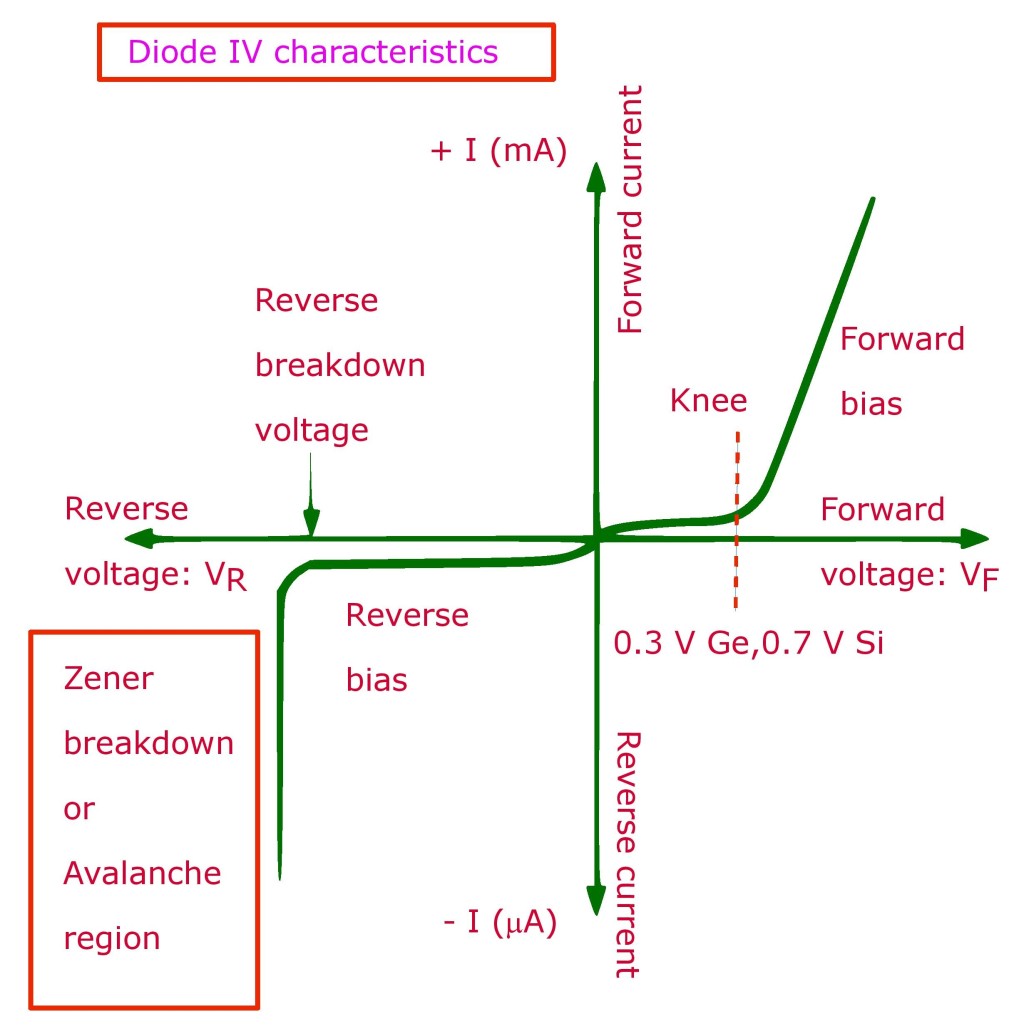
Current and resistance in pn junction diodes, L-VII.
Current flows in a pn junction diode under the application of external potential. The application of such a potential is known as “biasing”. The resulting Poisson’s equation becomes a nonlinear differential equation, i.e. charge concentrations now depend upon the potential. But the potential V (or Φ) now is a function of ‘x’ (location). Thus the…
-

Barrier potential and width in a pn step junction, L-VI.
Today we will discuss about the depletion region in greater detail than before. We will derive a quantitative relation among barrier potential and its width which are created in the depletion region, as discussed before. We will also derive an expression for the electric field that is established due to this potential. Lets first recall…
-
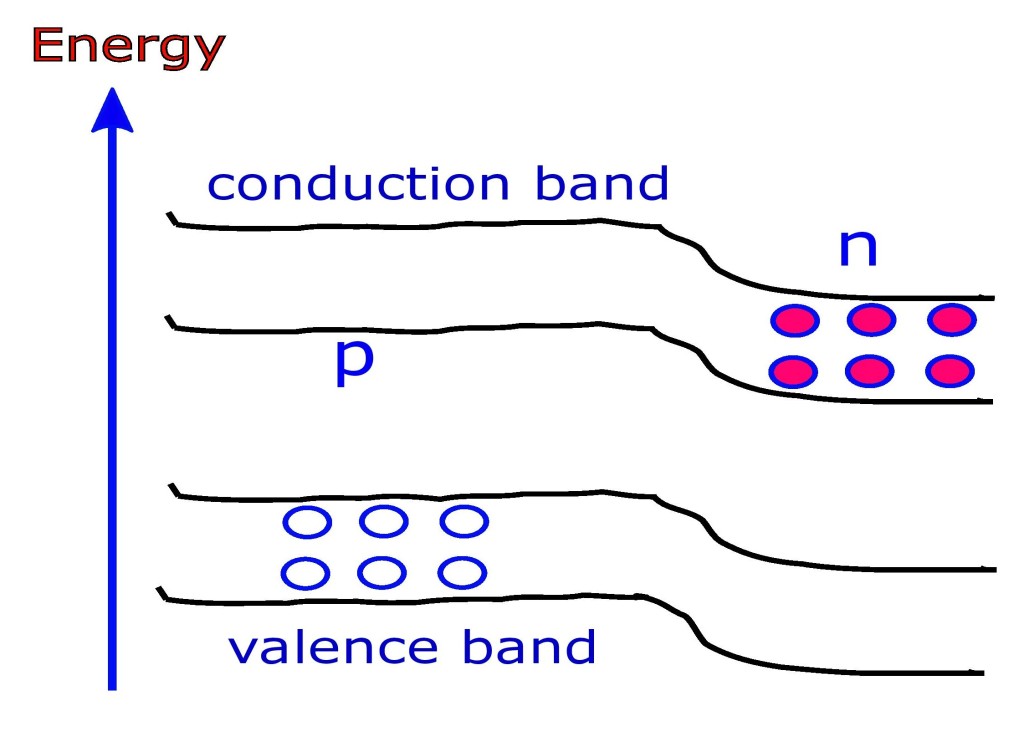
Energy levels in semiconductors. L-V.
Today we will discuss about energy levels and energy bands in semiconductors as well as breakdown in reverse bias. This is because there is an attractive interaction between the nucleus and the electrons. Electrons must gain energy to go into higher energy levels. This is achieved by sources of heat, light or applied potentials. When…
-
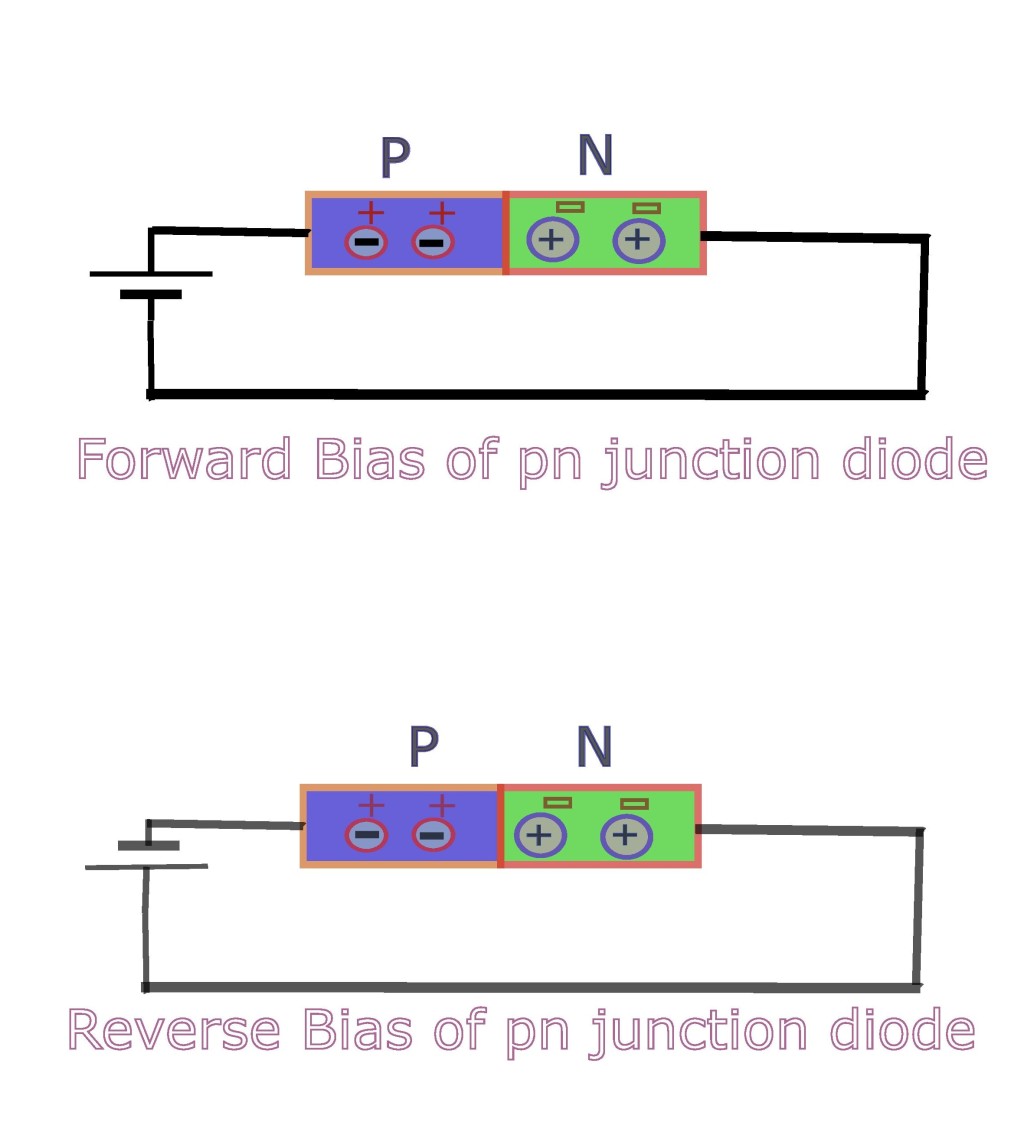
PN junction diodes (L-IV)
Today we will discuss about what are PN junction diodes and various conditions they can be subjected to, viz. the forward and reverse bias. We will discuss what is a depletion layer and whats a built-in potential barrier. In our previous lecture we saw what are extrinsic semiconductors. We discussed that they are of two…
-
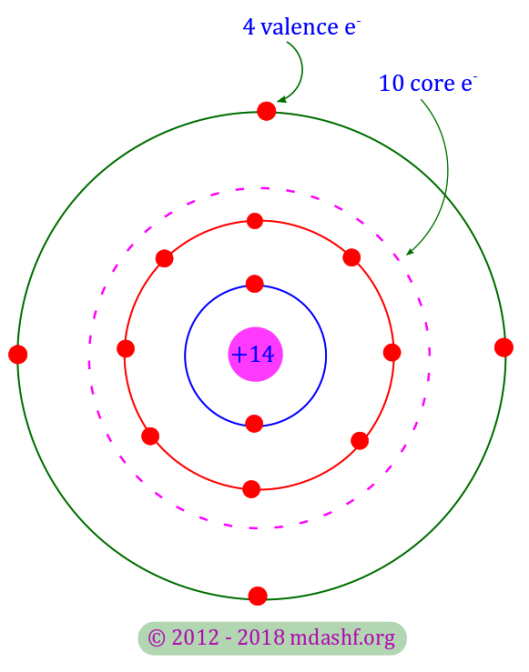
Conductivity and mobility in semiconductors, L-III
We will discuss in this lecture about drift velocity of electrons and holes in semiconductors which leads to the conductivity and mobility of free charge carriers in the same. To smooth-sail through this lecture you might wanna first brush up the concepts discussed in the last two lectures: lecture I and lecture II. Lets begin…
 M Dash Foundation: C Cube Learning