Category: Lectures & Presentations
-
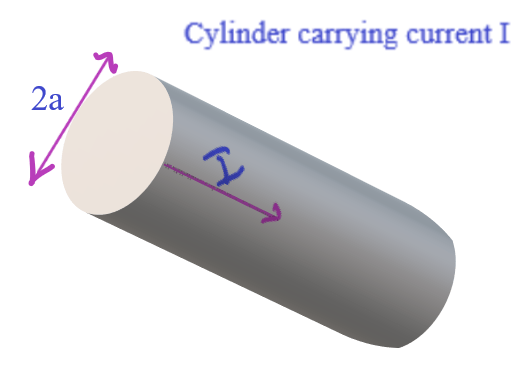
Problem 5.13 Application of Ampere’s Law.
Yesterday we saw an interesting application of the Ampere’s Law (– in magnetostatics and sometimes called Ampere’s circuital law also) for the infinite uniform surface current. Today we will see yet another display of the elegance and efficacy of this law in the following problem. This problem is inherited from Griffith’s text on Electrodynamics (3rd…
-
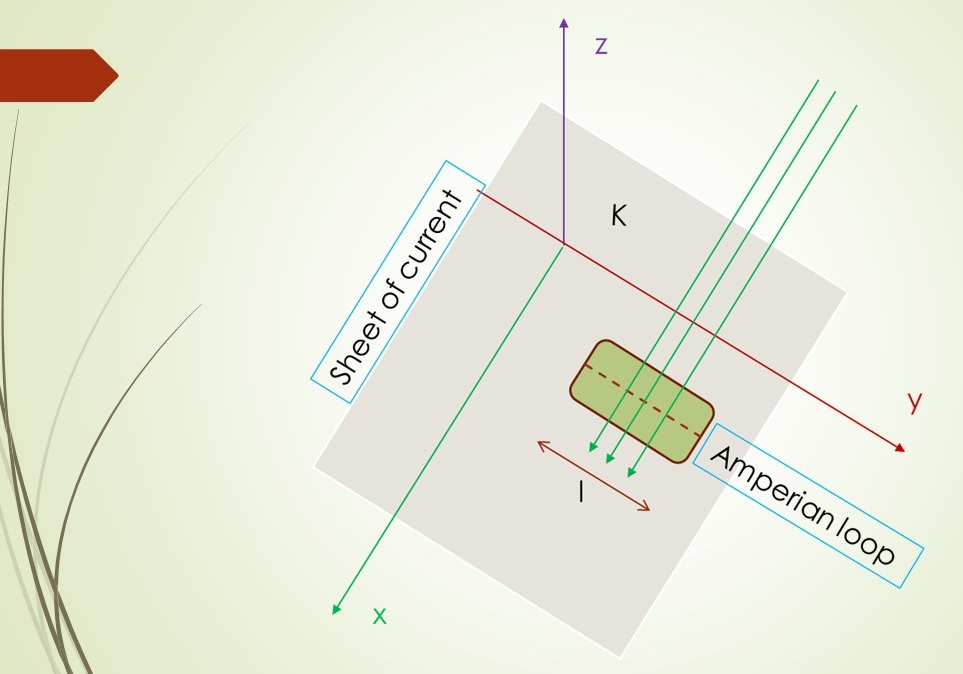
Example 5.7; Application of Ampere’s law.
The following problem is an interesting application of Ampere’s law apart from usual applications found in honors syllabus (eg infinite straight conductor, Solenoid and Torroid). This is to be found the excellent book by Griffith on Electrodynamics. Find the magnetic field of an infinite uniform surface current K (vect) = K i-cap, flowing over the…
-
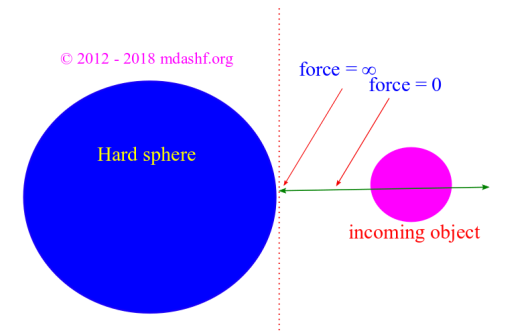
Maxwell Boltzmann distribution for a classical ideal gas
i. We assume a dilute gas which is enclosed by a thermally insulated container on all sides. Dilute gas in a thermally insulated container: Dilute means concentration of gas molecules is low. Insulated implies there is no reasonable flow of heat energy across the walls of the container. ii. Each molecule is assumed to be a…
-

If you would like to become a nuclear physicist, what you would like to know about the nucleus first?
A. structure of the nucleus Every atom consists of a dense positive central core of mass, known as nucleus. Its size is much smaller compared to the size of the atom, nut nonetheless it contains almost all of the mass of the atom. The nucleus is made of only neutrons and protons. — These are…
-
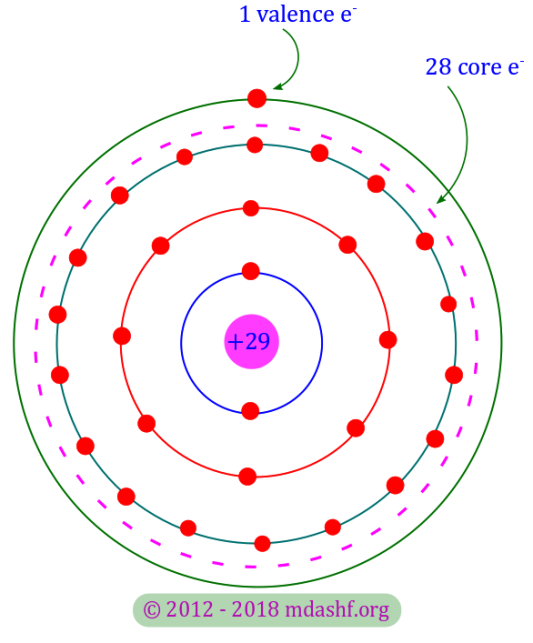
Semiconductors and charge carriers (L-I)
Analog electronics and applications Conductors, semiconductors and holes as charge carriers Topics covered in this lecture A. Conductors B. Semiconductors C. Holes D. Intrinsic semiconductors Conductors: A conductor is the name of a material which is a good conductor of electricity. Copper ( Cu ), Silver ( Ag ) and Gold ( Au ) are…
 M Dash Foundation: C Cube Learning