Category: Lectures & Presentations
-
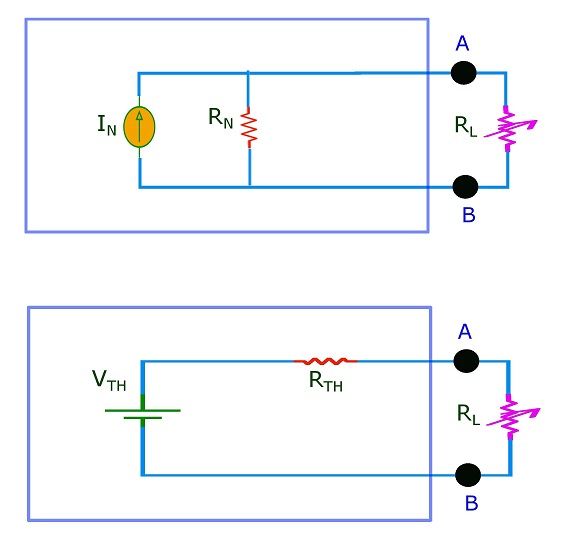
Thevenin’s and Norton’s theorem.
Today we will discuss the idea of current and voltage sources and the related Norton’s and Thevenin’s theorems. These are immensely useful in understanding many electrical circuits. The content was understood from the “electronic principles, 7th edition” by Albert Malvino and David J Bates, a text which I also followed in developing some of the…
-

Bridge type full wave rectifier, Lecture-XI.
In our last lecture we discussed the center tapped full wave rectifier and derived its most important parameters. Check that lecture for a conceptual continuity with the present lecture. Prior to that we discussed in much detail the case of the half wave rectifier and its parameters. Those two lectures can be accessed here. Today…
-

Center tapped full wave rectifier, Lecture-X
In our last two lecture we discussed in all detail the half wave rectifier which is constructed from an ideal diode and studied its various parameters such as its rectifier efficiency and transformer utilization factor. Please have a look at these lectures as the same will have an indubitable bearing on what we will discuss…
-

Diodes as half-wave rectifiers, Lecture-VIII and IX.
Rectification is an arrangement where AC current is converted into unidirectional current by employing diodes. Such devices are known as “rectifiers” and they offer low resistance to the current in a specified direction, while offering very high resistance in the opposite direction. If a semiconductor diode is supplied with AC current it is “forward biased”…
-
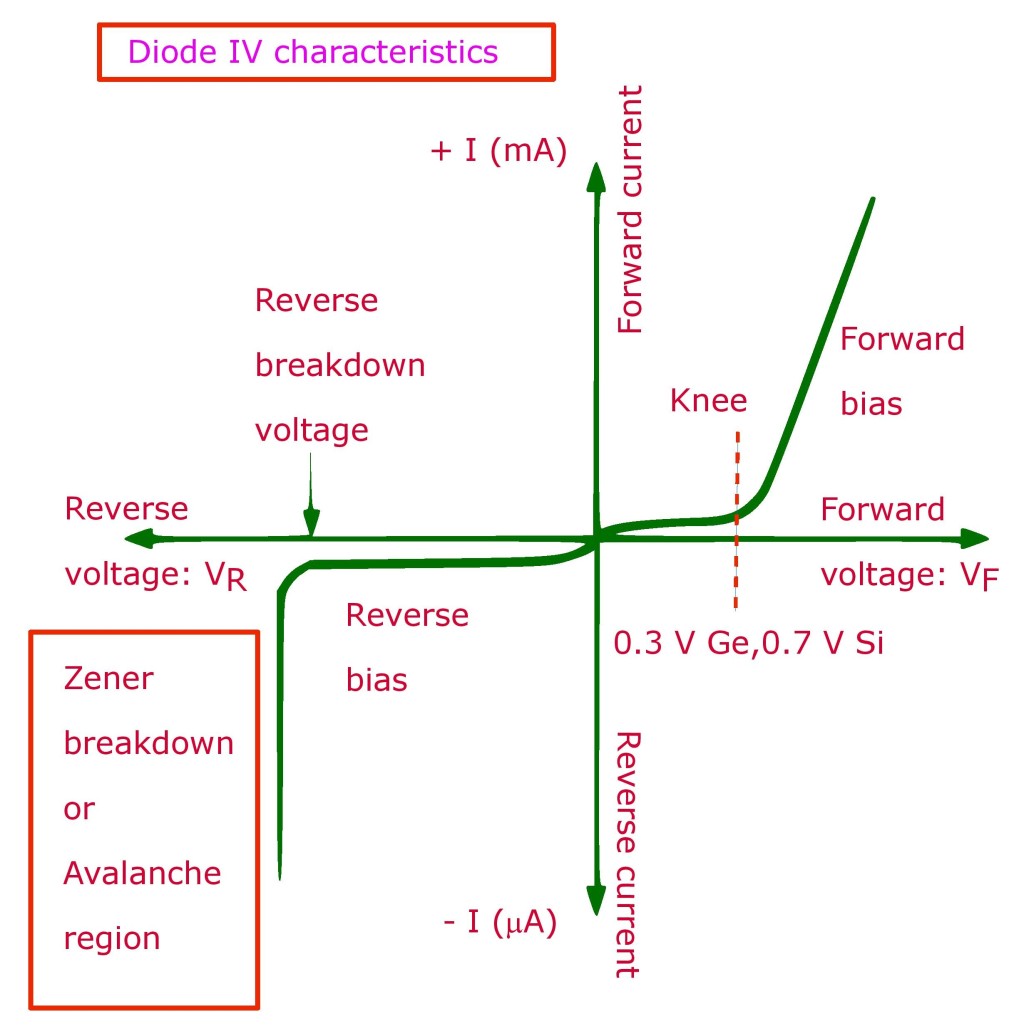
Current and resistance in pn junction diodes, L-VII.
Current flows in a pn junction diode under the application of external potential. The application of such a potential is known as “biasing”. The resulting Poisson’s equation becomes a nonlinear differential equation, i.e. charge concentrations now depend upon the potential. But the potential V (or Φ) now is a function of ‘x’ (location). Thus the…
 M Dash Foundation: C Cube Learning