Category: Analog Electronics
-
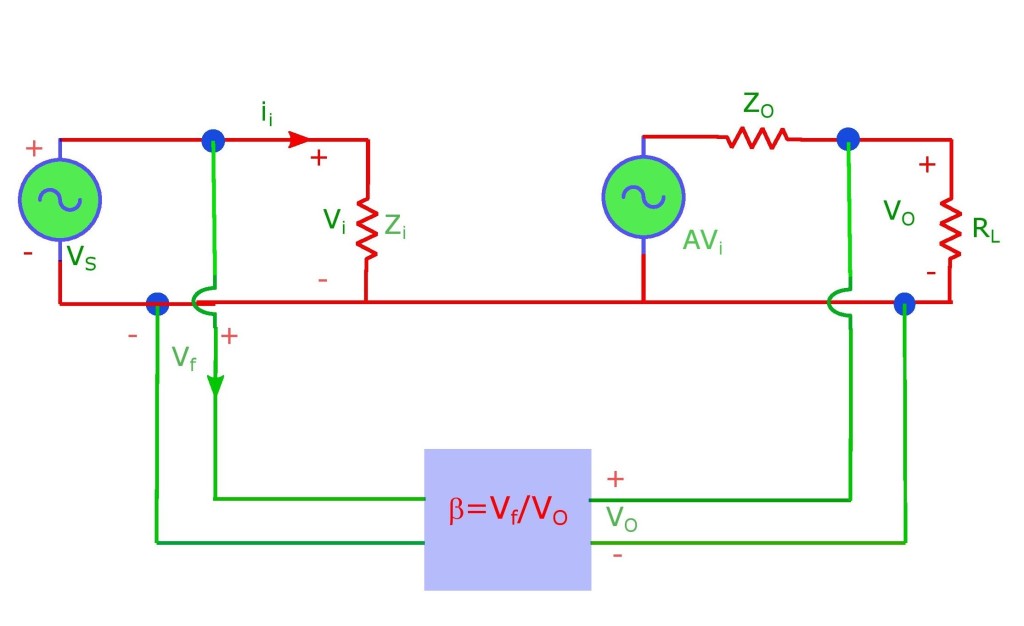
Feedback Amplifiers, Lecture-XXVIII, XXIX.
We have reached our final lectures of this series. (Counting the complimentary lecture of Norton’s and Thevenin’s theorem this takes the number of lectures to 30). Some more lectures could have been delivered in the class room but the terrain wasn’t quite welcoming for that ambition/requirement. When priorities are available (which could be years in…
-
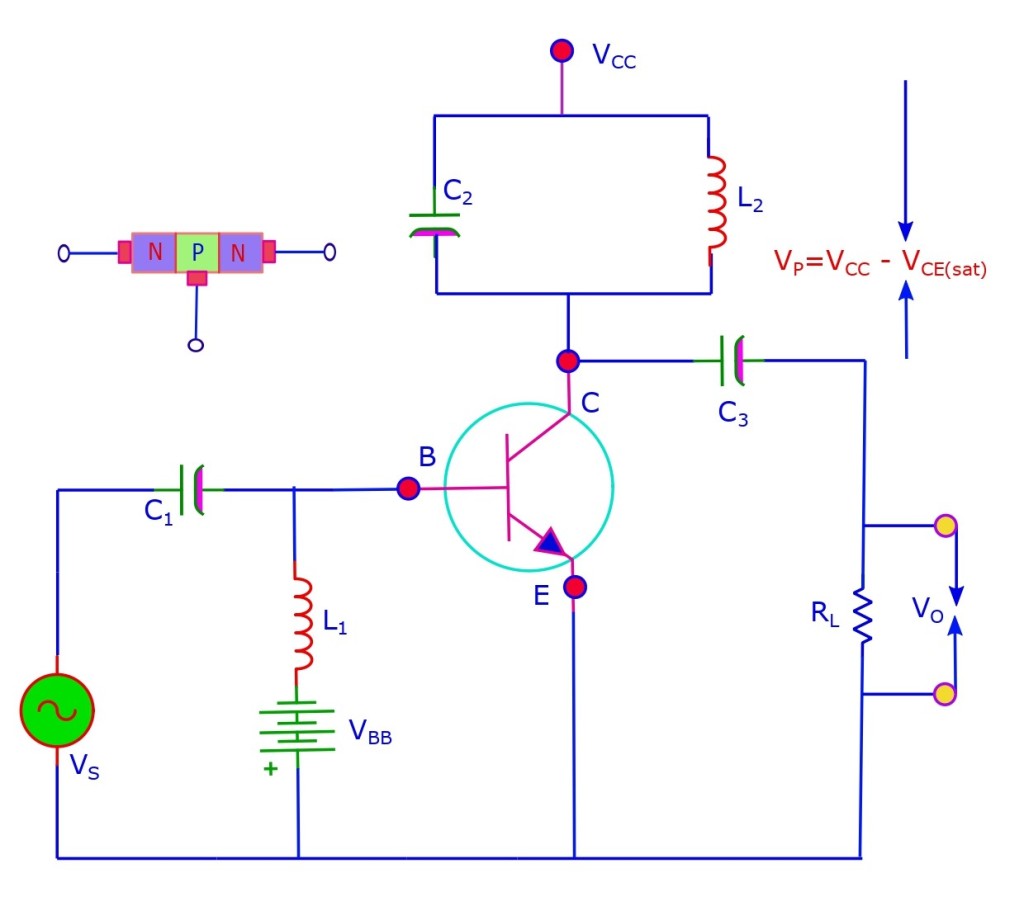
Classification of power amplifiers: class A, B, C amplifiers, Lectures – XXVI, XXVII.
Electronic systems need voltage amplification followed by power amplification. It is the voltage of output after signal is amplified to higher voltage level which drives the power amplifier. Transistor of high β (corresponds to thin base) is used for voltage amplifiers. But small β (which corresponds to thick base) are used in power amplifiers. According…
-

RC coupled amplifier at high frequency, Lecture XXIV and XXV.
In our last lecture we discussed the case of a single stage RC coupled amplifier, a common emitter transistor circuit. for its response at low frequencies, i.e. frequencies that are less than 50 Hz. Today we will discuss what changes are going to be effected in the same circuit when we pass signal at high…
-
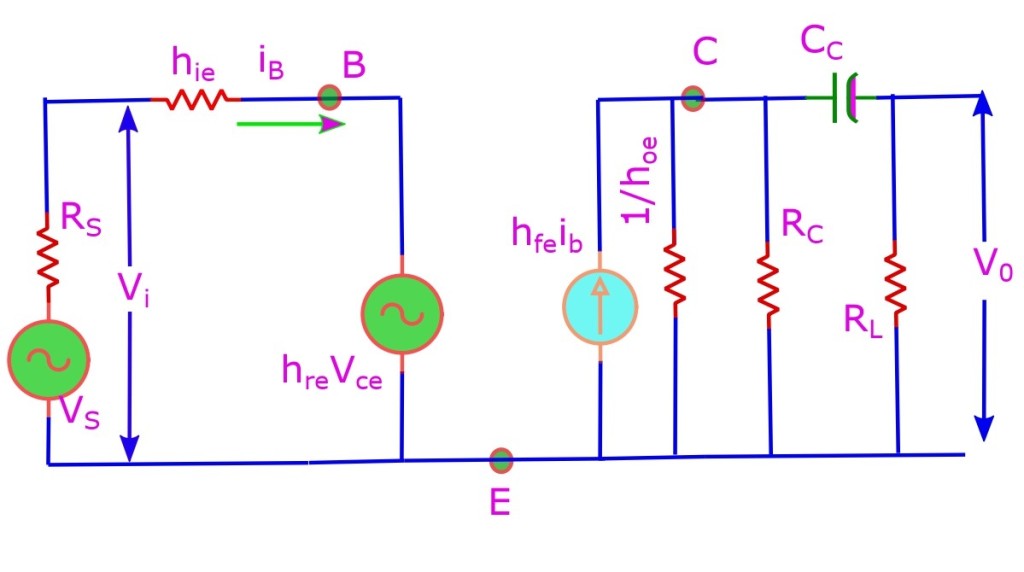
RC coupled amplifier and its low frequency response, Lecture-XXIII.
In our last two lectures we discussed in much detail the case of the single stage common emitter RC coupled amplifier. There we discussed the elements of the circuits (such as why a given capacitor is required and so on), determined the currents in various components (such as base and collector) and eventually calculated the…
-

Single stage CE amplifier, Lecture-XXI and XXII.
In the discussions of the BJT so far we have discussed, their construction and working. It has been mentioned earlier that the BJT is capable of 2 functions, namely switching and amplification. It works under 3 regions of operations: active region which lies between the reverse-reverse biased cutoff region and forward-forward biased saturation region. In…
 M Dash Foundation: C Cube Learning