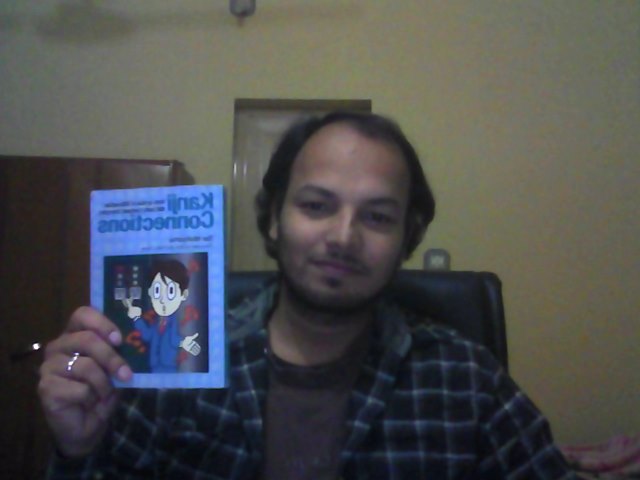
These 3 books I actually purchased from Japan and gifted my brother back in 2004 perhaps, I returned to India in 2008, about 2-3 years ago in 2010 or 2011 he found them and returned me as I was trying to learn some Japanese again. So I started learning again. Which is when I started writing my own haikus.

When I am asked for my references for which books one should follow to begin learning Japanese, here is what I suggest.
1. For Hiragana, Katakana (the phonetic alphabet)
This book comes with many exercises and really quick to teach you most important things as a beginner. Its an excellent and slim size book.
にほんご かんたん (reads Nihongo Kantan, in Hiragana, means: Easy Japanese)
Book Title: SPEAK JAPANESE, A textbook for young students.
Authors, Kiyo Saka and Hisako Yoshiki
Publications, Kenkyusha
2. Learning practical and wide deal of applications into living life in Japan, this “Lonely Planet Phrasebooks for Japanese” with 2000 words 2-way pocket size dictionary.
3. Learning Kanji, the pictograph Chinese icons,, images that are used in Japanese (hence they entail their own rule and phonetic translation)
Only 400 (out of about 3000 that makes you almost complete Japanese for communication) are described with explanations that can be easily grasped.
Book: Kanji Connections. By Tae Moriyama.
English translation by Bob and Reiko Gavey
(guys get married to Japanese women and write texts to teach Japanese)
From Publishers; Tsufunotomo Co. Ltd.

 M Dash Foundation: C Cube Learning
Leave a reply to Some interesting findings in ‘kanji”. « Invariance Publishing House, mdashfoundation Cancel reply